



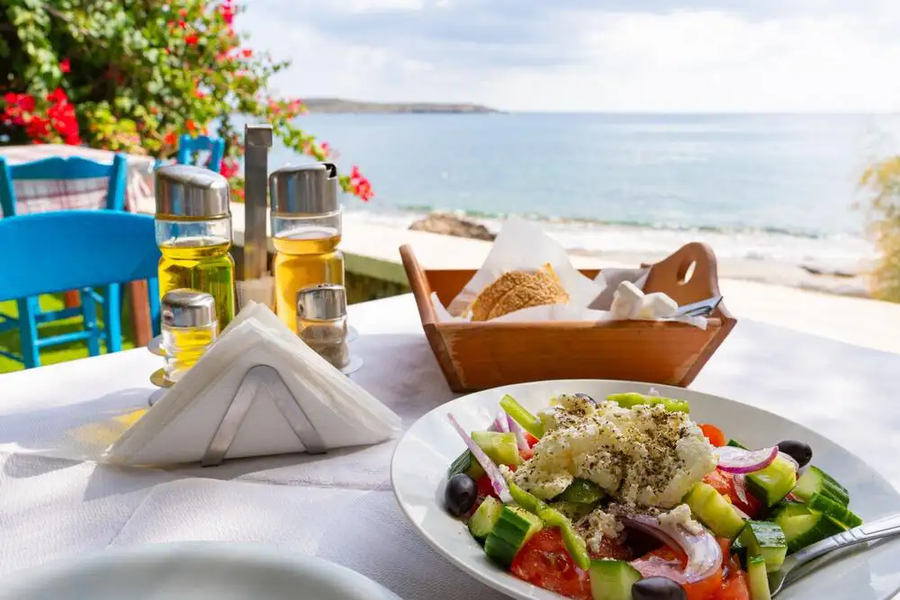
Greek Gastronomy and Culture: More Than Good Food
Many visitors tell us how much they enjoy Greek food. They admire the olive oil, fresh vegetables, fish, cheese, herbs and local wine. However, exceptional ingredients tell only part of the story.
Greek gastronomy and culture have developed together for thousands of years. Behind every traditional dish, visitors can discover history, hospitality, respect for nature and the Greek joy of sharing.
Therefore, Greek food offers much more than a pleasant taste. It provides a direct connection with the Greek way of life.
What does Greek food reveal about Greek culture?
The food culture of a nation reveals its history, values and way of life. It shows how people welcome visitors, communicate with each other and share important moments.
In Greece, people do not treat food as a simple daily necessity. Instead, they use the table as a place for conversation, friendship and human connection.
Families, friends and visitors gather around it. They share dishes, stories and experiences. As a result, the Greek table strengthens relationships and carries traditions from one generation to the next.
This connection between food and social life did not begin recently. It has deep roots in ancient Greek civilisation.
Greek gastronomy and culture in ancient Greece
In ancient Greece, shared meals played an important social role. People connected food with hospitality, communication and public life.
The ancient Greeks did not view a meal only as a way to satisfy hunger. They also saw it as an opportunity to strengthen relationships and exchange ideas.
The symposium offers a well-known example. After the main meal, participants drank wine, listened to music and discussed poetry, philosophy, politics and everyday life. The symposium brought people together through conversation and shared experience.
However, it was more than a social gathering. It also reflected important elements of ancient Greek culture: dialogue, intellectual curiosity and participation in community life.
For this reason, food, music, poetry and discussion became parts of one cultural experience.
From the ancient symposium to the modern Greek table
The ancient symposium differs from a modern Greek meal. Nevertheless, the idea of gathering around a shared table remains familiar.
Today, Greeks often place several dishes in the centre of the table. Everyone shares the food instead of ordering a completely separate meal. Meanwhile, conversation continues for a long time.
People do not rush to finish. They enjoy the meal, the company and the moment.
Therefore, the value of the Greek table does not depend only on what people serve. It also depends on how they share it.
This tradition explains why Greek gastronomy feels so social and welcoming to international visitors. The meal becomes an experience rather than a simple service.
Simplicity, quality and moderation
Greek cuisine does not need unnecessary complexity. Instead, it relies on fresh ingredients, seasonality and careful preparation.
A freshly caught fish, good olive oil, seasonal vegetables, herbs and a glass of wine can create an excellent meal. Each ingredient keeps its natural character.
This preference for simplicity also has ancient roots. Cereals, olives, olive oil, wine, legumes, fruit, herbs and fish played an important role in the ancient Greek diet.
At the same time, the ancient Greek idea of moderation influenced many aspects of life. Quality and balance often mattered more than excess.
That principle still appears in Greek cuisine today. A good dish does not require too many ingredients. It requires fresh products, knowledge and respect for their natural flavour.
However, simplicity does not mean a lack of care. On the contrary, simple cooking often requires experience. Families pass this knowledge from one generation to the next.

Hospitality as a Greek cultural value
Hospitality remains one of the strongest links between Greek gastronomy and culture.
In Greece, hosts do not simply offer visitors something to eat. They want them to feel relaxed, comfortable and welcome. Food becomes a way to express generosity and respect.
This attitude also comes from the ancient Greek tradition of hospitality, known as xenia. Ancient Greeks treated hospitality as an important moral and social responsibility. The host offered the guest food, drink, protection and rest.
As a result, welcoming a stranger became a sign of good character and cultural refinement.
The same spirit continues in modern Greece. A host often encourages guests to eat more, taste another dish or stay longer at the table.
Therefore, when travellers remember Greek food, they rarely remember only the flavours. They also remember the welcome, the conversation, the view and the people who shared the experience with them.
The land and sea shaped Greek gastronomy
Greek gastronomy developed through a close relationship with the natural environment.
The climate, mountains, islands, fertile areas and long coastline shaped local products and regional recipes. Each place created its own culinary identity based on what the land and sea provided.
Moreover, the olive tree and the vine held an important place in Greek life from antiquity. Olive oil and wine served not only as food products but also as important parts of trade, customs and cultural identity.
The sea played an equally important role. It provided food, connected communities and opened routes for travel and trade.
Through its ports, Greece exchanged products and ideas with many Mediterranean cultures. However, Greek communities adapted those influences to local ingredients and traditions.
Consequently, Greek cuisine developed through both continuity and cultural exchange.
Greek food and the sea in Halkidiki
The connection between Greek food and the sea remains especially visible in Halkidiki.
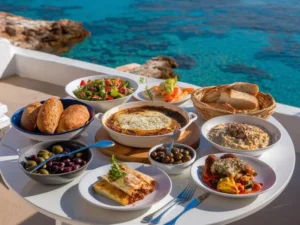
A sailing cruise allows visitors to discover quiet bays, clear water and beautiful coastal landscapes. Afterwards, a stop at a seaside taverna can add another dimension to the experience.
Fresh fish, local dishes, seasonal ingredients and a view of the Aegean create more than a good lunch. They connect the visitor with the landscape and the local way of life.
Furthermore, sailing changes the way travellers experience a destination. They do not simply observe the coastline from a distance. They move through it, swim in its waters and discover places that roads cannot always reach.
When they combine this experience with Greek food and hospitality, they gain a more complete understanding of Halkidiki.
The sea, the flavours, the people and the shared time become parts of the same journey.

Greek gastronomy as a living expression of civilisation
Greek gastronomy does not belong only to museums or history books. It remains a living part of everyday life.
Of course, modern Greek cuisine has evolved. Every historical period, region and community has added new ingredients, recipes and influences. Still, several important values have remained strong.
Greeks continue to value hospitality, simplicity, seasonal food and shared meals. They also continue to use the table as a place for conversation and connection.
Therefore, Greek gastronomy represents more than a collection of traditional recipes. It expresses a cultural attitude towards food, nature, visitors and community.
This is why Greek food offers more than culinary pleasure. It gives travellers an authentic connection with Greek history, hospitality and everyday life.
Ultimately, Greek gastronomy and culture tell the same story: a story of sharing, balance, human connection and respect for the place that provides the food.
Frequently asked questions
Why is Greek gastronomy important to Greek culture?
Greek gastronomy reflects the country’s history, hospitality and social traditions. Greeks use the shared table to communicate, welcome visitors and strengthen relationships.
Does modern Greek food have roots in ancient Greece?
Yes. Ingredients such as olive oil, wine, grains, legumes, herbs, fruit and fish also played an important role in ancient Greek food culture. Ancient traditions of shared meals and hospitality also influenced Greek cultural life.
What was an ancient Greek symposium?
An ancient Greek symposium was a structured social gathering that usually followed the main meal. Participants drank wine, listened to music and exchanged ideas through conversation.
Why is hospitality connected with Greek food?
Greek hosts traditionally express care and respect by offering food and drink. This custom connects modern Greek hospitality with the ancient idea of xenia.
How can visitors experience Greek gastronomy in Halkidiki?
Visitors can combine local cuisine with a sailing experience, swimming stops and a meal at a seaside taverna. This allows them to experience the landscape, flavours and hospitality of Halkidiki together.